

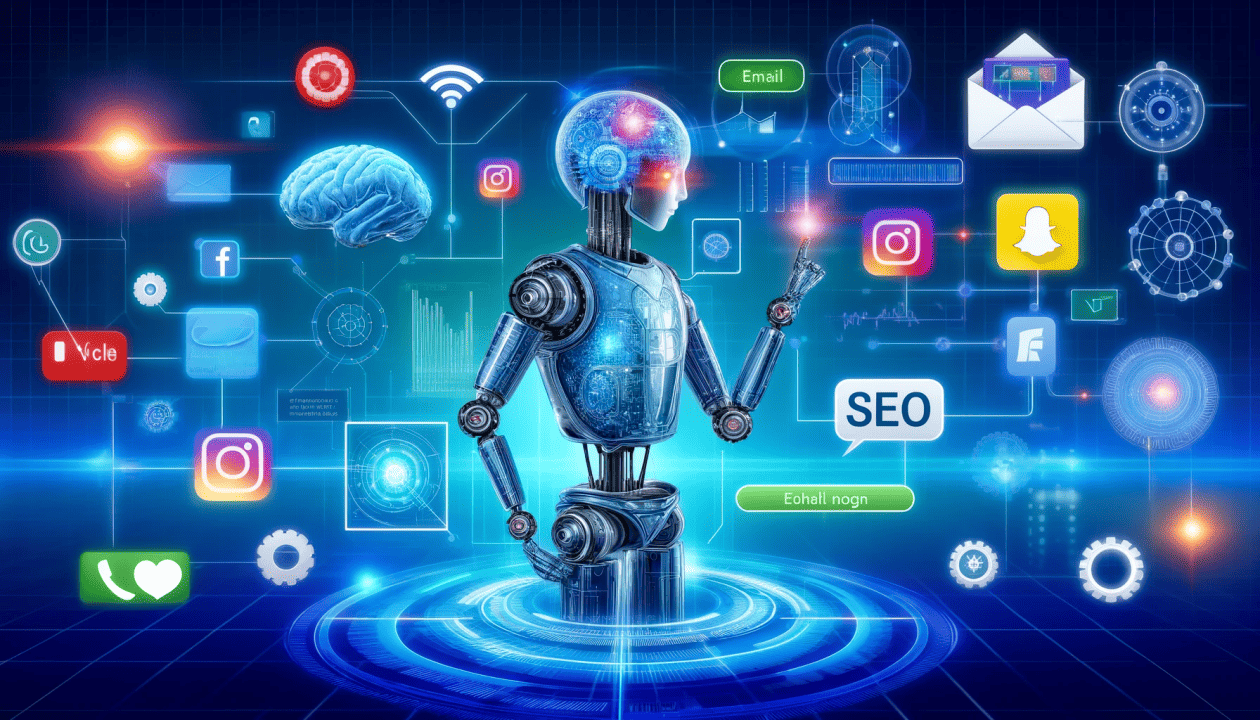
Artificial Intelligence (AI) is rapidly transforming the world of digital marketing services. Businesses today are using AI-powered technologies to understand customer behavior, personalize content, and improve marketing strategies. As online competition grows, AI helps marketers make smarter decisions based on data and automation. By analyzing large amounts of information quickly, AI allows companies to deliver more targeted and effective marketing campaigns.
One of the most important benefits of AI in digital marketing is data analysis. Digital platforms generate massive amounts of customer data, including browsing behavior, purchase history, and social media interactions. AI tools can analyze this data to identify patterns and trends. This helps businesses understand their customers better and create marketing campaigns that meet their needs and preferences.
Another key area where AI is making a significant impact is personalized marketing. Consumers today expect brands to provide relevant content and recommendations. AI algorithms analyze user behavior and show personalized ads, product suggestions, and email marketing content. For example, many e-commerce websites recommend products based on a user’s previous searches or purchases. This level of personalization improves customer experience and increases the chances of conversion.
Chatbots and virtual assistants are also becoming common in digital marketing. AI-powered chatbots can answer customer questions instantly, provide product information, and assist with purchases. They are available 24/7, which improves customer service and saves time for businesses. Many companies use chatbots on websites, messaging apps, and social media platforms to interact with customers in real time.
AI also plays an important role in marketing automation. Tasks such as email marketing, SMM, WhatsApp marketing, social media posting, and ad optimization can be automated using AI tools. These systems analyze campaign performance and automatically adjust strategies to improve results. For example, AI can determine the best time to send emails or show advertisements to increase engagement.
Another growing application of AI is predictive analytics. By studying past data, AI can predict future customer behavior and market trends. This helps marketers plan campaigns more effectively and allocate resources wisely. Businesses can identify potential customers, forecast demand, and design strategies that deliver better returns on investment.
AI is also becoming increasingly useful for SEO, helping marketers analyze keywords, understand search intent, identify content opportunities, and monitor website performance. Similarly, AI can support Google Ads PPC and Meta Ads by helping businesses analyze audiences, optimize campaigns, and improve advertising performance.
For businesses selling products online, AI can enhance e-commerce through personalized recommendations, automated customer support, product analysis, and targeted marketing campaigns. When combined with professional website development, UI/UX design, and graphic design, AI can contribute to a more personalized and engaging digital experience.
In conclusion, Artificial Intelligence is reshaping digital marketing services by making it more data-driven, efficient, and personalized. From analyzing customer data to automating campaigns and improving customer interactions, AI provides powerful tools for modern marketers. As technology continues to evolve, the role of AI in digital marketing will become even more significant, helping businesses connect with their audiences in smarter and more meaningful ways.


