As more people spend time online, businesses are shifting their marketing efforts from traditional methods to digital platforms. This transformation has created a huge demand for skilled digital marketers who know how to attract customers, build brands, and generate sales online.
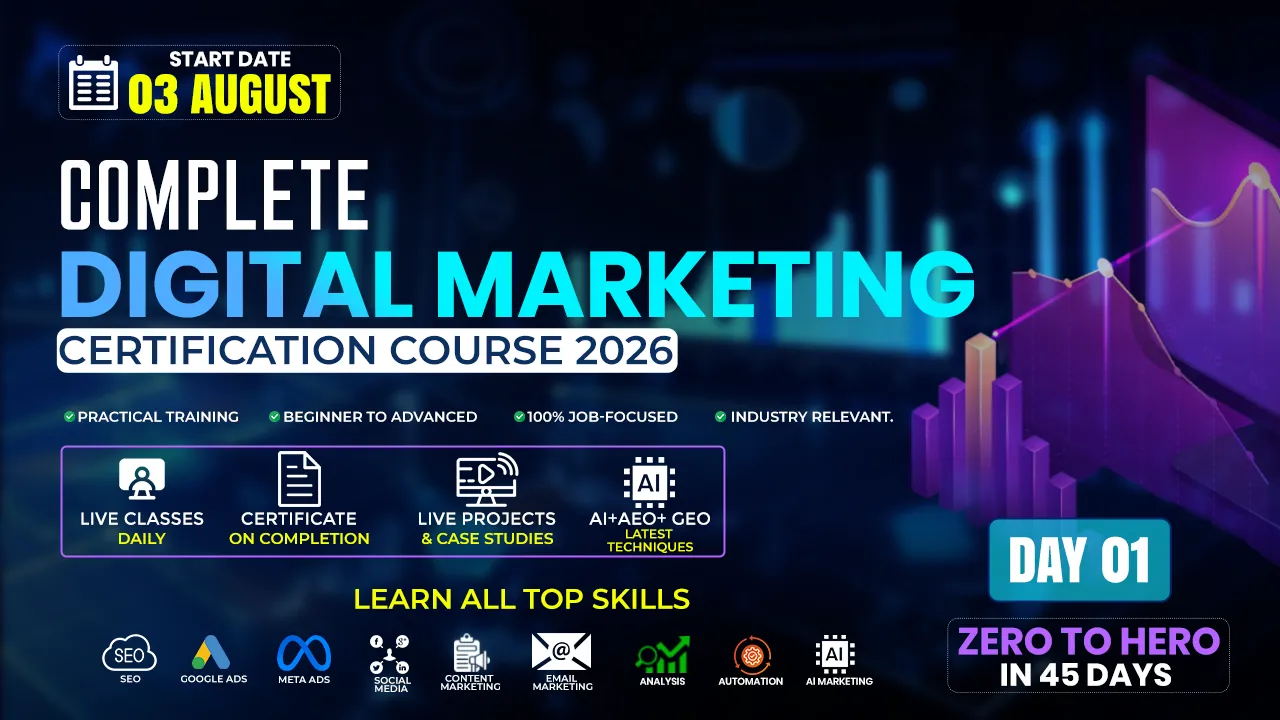
This guide is designed for complete beginners and serves as the first step in understanding digital marketing. It explains the core concepts, importance, ecosystem, marketing channels, latest trends, career opportunities, and the roadmap to becoming a successful digital marketer. The content is based on the Day 1 learning objectives of the Digital Marketing Certification Course.
What is Digital Marketing?
Digital marketing is the process of promoting products, services, or brands using digital platforms such as websites, search engines, social media platforms, email, mobile applications, and online advertising. Unlike traditional marketing, digital marketing allows businesses to reach a targeted audience, measure campaign performance, and optimize strategies using real-time data and analytics.
Imagine a customer searching on Google for the "best laptop under ₹50,000." If your website appears on the first page, that visibility is often the result of digital marketing strategies such as Search Engine Optimization (SEO). Similarly, when someone discovers your business through Instagram, Facebook, YouTube, or an email newsletter, digital marketing is working behind the scenes to connect your brand with potential customers.
Digital marketing is not limited to large companies. Small businesses, local shops, educational institutes, healthcare clinics, startups, and freelancers all use digital marketing to reach their ideal customers and grow their businesses.
Why is Digital Marketing Important?
Today's consumers rely heavily on the internet before making purchasing decisions. They compare products, read reviews, watch videos, and search for recommendations before choosing a service or product. Businesses that have a strong online presence are more likely to attract and retain customers.
One of the biggest advantages of digital marketing is that it helps businesses connect with the right audience at the right time. Instead of advertising to everyone, businesses can target people based on age, location, interests, behavior, and purchasing intent. This improves marketing efficiency while reducing unnecessary advertising costs.
Another important benefit is measurable performance. Every click, website visit, lead, purchase, and conversion can be tracked. Businesses can identify which campaigns perform well and make informed decisions based on data instead of assumptions.
According to your course material, digital marketing enables businesses to build customer trust, increase website traffic, generate quality leads, improve sales, and achieve better return on investment through data-driven marketing strategies.
Traditional Marketing vs Digital Marketing
Understanding the difference between traditional and digital marketing helps beginners appreciate why digital marketing has become the preferred choice for businesses worldwide.
| Traditional Marketing | Digital Marketing |
| Newspaper advertisements | Website marketing |
| Television commercials | Search Engine Optimization (SEO) |
| Radio advertising | Social media marketing |
| Billboards | Google Ads |
| Flyers and pamphlets | Email marketing |
| Difficult to measure performance | Easy performance tracking |
| Higher advertising cost | Better targeting with lower cost |
Traditional marketing mainly focuses on offline channels, while digital marketing leverages online platforms where consumers spend most of their time today. Businesses can monitor campaign performance instantly, adjust strategies quickly, and maximize their marketing budgets more effectively using digital marketing tools.
The Digital Marketing Ecosystem
Digital marketing is not a single activity. It is a combination of multiple interconnected components that work together to attract visitors, generate leads, and increase business revenue.
| Component | Purpose |
| Website | Online business identity |
| SEO | Generate organic traffic |
| Social Media Marketing | Build brand awareness |
| Content Marketing | Educate and attract customers |
| Paid Advertising | Generate quick leads |
| Email Marketing | Build long-term relationships |
| AI Marketing | Automate and optimize campaigns |
| Analytics | Measure performance |
Each component supports the others. For example, SEO helps people discover your website through Google search. Content marketing provides useful information that builds trust. Social media increases brand visibility, while paid advertising delivers immediate traffic. Analytics measure every campaign and provide valuable insights for future improvements.
A successful digital marketer understands how these components work together to create a complete marketing system rather than treating them as separate activities.
Major Digital Marketing Channels
Digital marketing includes several channels that help businesses communicate with their target audience. Each channel serves a unique purpose and contributes to business growth.
| Channel | Main Objective | Example |
| SEO | Organic website traffic | Google Search |
| Content Marketing | Educate customers | Blogs |
| Social Media Marketing | Community engagement | Instagram, Facebook |
| Google Ads | Paid search visibility | Search Ads |
| Meta Ads | Social advertising | Facebook Ads |
| YouTube Marketing | Video promotion | YouTube Videos |
| Email Marketing | Customer retention | Newsletters |
Search Engine Optimization focuses on improving website rankings in search engines without paying for advertisements. Content marketing builds authority by publishing valuable blogs, articles, videos, and educational resources. Social media marketing strengthens relationships with customers through regular engagement.
Paid advertising provides instant visibility through Google Ads and Meta Ads, while email marketing helps nurture leads and maintain long-term customer relationships. According to your course material, combining organic and paid marketing strategies delivers the best overall results.
Organic Marketing vs Paid Marketing
Every digital marketing strategy generally includes two major approaches.
| Organic Marketing | Paid Marketing |
| Free traffic | Paid traffic |
| Long-term growth | Instant visibility |
| SEO | Google Ads |
| Blogs | Meta Ads |
| Social Media Content | Display Ads |
| YouTube Videos | Shopping Ads |
Organic marketing requires patience but builds sustainable long-term traffic. Paid marketing delivers immediate results but depends on advertising budgets. Businesses often use both methods together to maximize visibility and conversions.
Latest Digital Marketing Trends
Digital marketing is continuously evolving with new technologies and changing consumer behavior. Keeping up with the latest trends is essential for marketers who want to remain competitive.
Your course introduces several emerging trends shaping the future of digital marketing:
| Trend | Purpose |
| AI Marketing | Automation and optimization |
| AEO | Answer Engine Optimization |
| GEO | Generative Engine Optimization |
| AI Tools | Content creation and productivity |
| Marketing Automation | Workflow automation |
| Voice Search Optimization | Conversational search |
| Short-Form Video Content | Higher engagement |
| Data-Driven Marketing | Better decision making |
Artificial Intelligence is transforming content creation, customer analysis, campaign optimization, and automation. Answer Engine Optimization (AEO) focuses on helping content appear in answer-based search experiences, while Generative Engine Optimization (GEO) prepares content for AI-powered platforms and generative search systems. These trends reflect the growing importance of AI in modern marketing strategies.
Career Opportunities in Digital Marketing
Digital marketing offers excellent career opportunities because almost every business needs an online presence. As companies continue investing in digital transformation, the demand for skilled professionals keeps increasing.
Some of the most popular career options include:
| Career | Primary Responsibility |
| SEO Specialist | Improve website rankings |
| Google Ads Expert | Manage search advertising |
| Meta Ads Specialist | Run Facebook and Instagram campaigns |
| Social Media Manager | Manage social platforms |
| Content Strategist | Create marketing content |
| Email Marketing Specialist | Design email campaigns |
| Performance Marketer | Optimize advertising ROI |
| Digital Marketing Executive | Execute marketing strategies |
| Freelancer | Work independently |
| Agency Owner | Build a marketing business |
Digital marketing provides flexibility, work-from-home opportunities, freelancing options, entrepreneurship, and attractive salary packages. Skill development plays a much bigger role than academic qualifications in this industry, making it accessible for learners from different educational backgrounds.
Your 45-Day Digital Marketing Learning Journey
Learning digital marketing becomes easier when you follow a structured roadmap. According to the course outline, the journey progresses from basic concepts to advanced implementation.
| Week | Focus Area |
| Week 1 | Digital Marketing Fundamentals |
| Week 2 | Website Development & SEO |
| Week 3 | AI Marketing, AEO & GEO |
| Week 4 | Social Media Marketing |
| Week 5 | Google Ads & Meta Ads |
| Week 6 | Email Marketing, Automation, Freelancing & Live Projects |
This structured learning path helps beginners build confidence gradually while developing practical skills that are directly applicable in real-world business environments.
Who Should Learn Digital Marketing?
Digital marketing is suitable for anyone interested in growing professionally or expanding a business online. Students can improve their employability by learning in-demand skills. Business owners can generate more leads and sales without relying entirely on traditional advertising. Freelancers can offer services to clients worldwide, while entrepreneurs can build scalable online businesses through effective digital marketing strategies.
Because digital marketing combines creativity, technology, communication, and data analysis, it offers opportunities for individuals with different interests and career goals.


