
The digital marketing world is evolving rapidly, and with the rise of AI-driven search, a new concept has entered the spotlight—GEO (Generative Engine Optimization). While SEO (Search Engine Optimization) has been the foundation of online visibility for years, GEO is shaping how content appears in AI-generated answers from tools like ChatGPT and Google’s AI search features. Understanding the difference between SEO and GEO is essential for staying competitive in 2026.
What is SEO?
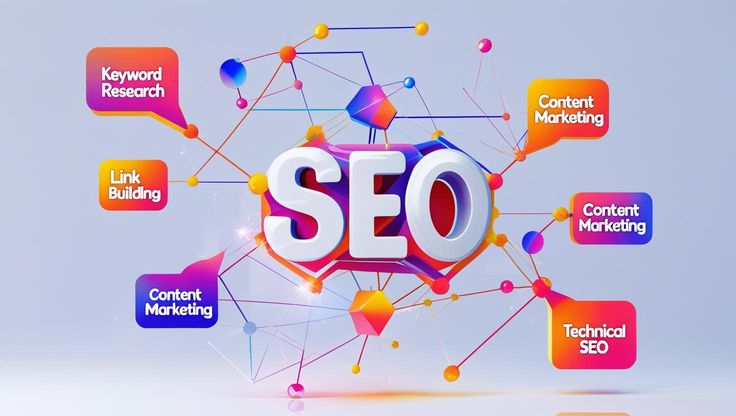
SEO, or Search Engine Optimization, is the process of optimizing your website to rank higher on traditional search engines like Google. It focuses on improving visibility through keywords, backlinks, technical optimization, and high-quality content.
The goal of SEO is simple: get users to click on your website link from search engine results pages (SERPs). Marketers use strategies like keyword research, on-page optimization, and link building to drive organic traffic.
What is GEO?
GEO (Generative Engine Optimization) is a newer concept focused on optimizing content for AI-powered search engines and chat-based platforms. Instead of just ranking links, AI tools generate direct answers to user queries by pulling information from multiple sources.
The goal of GEO is different: get your content featured in AI-generated responses, even if users don’t click on your website.
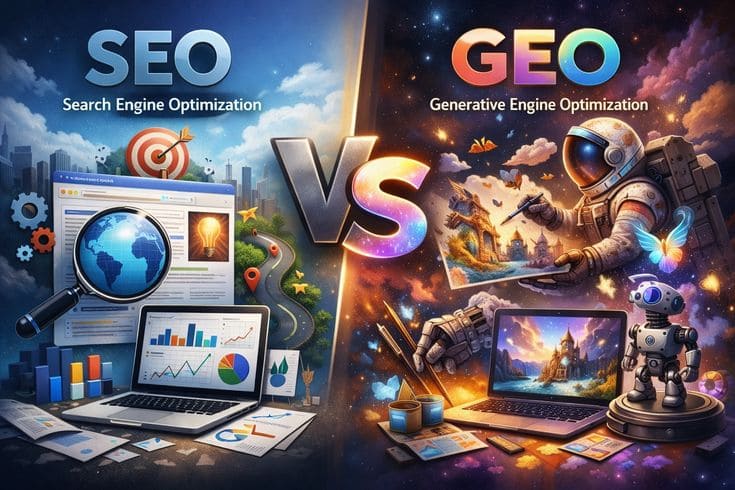
SEO vs GEO: A Comparative Overview for Digital Marketers
SEO focuses on ranking websites on search engines, whereas GEO focuses on appearing in AI-generated answers. The main goal of SEO is to increase website clicks, while GEO aims to boost visibility and authority. In terms of strategy, SEO relies on keywords, backlinks, and technical optimization, whereas GEO emphasizes clear answers, structured content, and authority. When it comes to user behavior, SEO expects users to click on links, while GEO delivers instant answers without requiring clicks. Finally, SEO content is typically long-form and keyword-rich, whereas GEO content is more direct, conversational, and value-driven.
Conclusion
SEO is not dead—it is evolving. GEO is not replacing SEO but complementing it. While SEO brings traffic through clicks, GEO builds visibility through AI-driven answers.
To succeed in today’s digital marketing landscape, marketers must adapt to both. The future belongs to those who create content not just for search engines, but also for intelligent AI systems that shape how people consume information.